
Starting a business sounds exciting — until you actually sit down to do it and realize you have no idea where to begin. Most people either overthink it and never start, or jump in too fast without a real plan and burn out quickly. Neither works.
The good news? Starting a business doesn’t have to be complicated. It just needs a clear roadmap. This guide breaks it down into 10 straightforward steps that work whether you’re starting a side hustle, a local service, or an online business from scratch.
Let’s get into it.
Step 1: Find a Business Idea That Actually Has Demand
Before anything else, you need an idea — but not just any idea. You need one that people are already paying for. A common mistake beginners make is falling in love with an idea that solves their problem, but nobody else’s. Instead, look for the overlap between what you’re good at, what you enjoy, and what people are willing to spend money on.
Quick ways to validate demand:
- Search the idea on Google and see if businesses already exist (competition = demand)
- Browse Reddit, Facebook Groups, or Quora for people asking the same question
- Check Amazon, Etsy, or Fiverr to see if similar products or services are selling
If people are already buying something similar, that’s a green flag — not a reason to give up.
Step 2: Research Your Target Audience
Once you have an idea, get crystal clear on who your customer is. Not “everyone” — a specific type of person.Ask yourself:
- How old are they?
- What problem are they trying to solve?
- Where do they hang out online?
- What have they already tried (and why didn’t it work)?
The more specific your answer, the better your marketing will be later. A business that tries to serve everyone usually ends up serving no one well.
Step 3: Analyze the Competition
Knowing your competition isn’t about copying them — it’s about understanding what’s already working and where the gaps are.
| What to Look For | Why It Matters |
|---|---|
| Their pricing | Helps you position your offer |
| Customer reviews | Shows what people love and hate |
| Their marketing style | Gives you content ideas |
| What they’re missing | Your opportunity to stand out |
Spend an hour looking at 3–5 competitors. Read their reviews. Visit their websites. You’ll learn more in one hour of research than in weeks of guessing.
Step 4: Write a Simple Business Plan
The word “business plan” scares a lot of beginners. It shouldn’t.
You don’t need a 40-page document. A one-page plan works just fine to start. It should cover:
- What you’re selling
- Who are you selling it to
- How you’ll reach customers
- How you’ll make money (your pricing model)
- What are your rough startup costs
Think of it as a thinking tool, not a formal document. It forces you to get honest about what you’re actually building.
Step 5: Choose a Business Structure
This is where things get a little official. Your business structure affects your taxes, liability, and how you can raise money later.
Here are the most common options for beginners:
Sole Proprietorship — Simplest to set up. You and the business are legally the same. Best for freelancers and solo service providers just starting.
LLC (Limited Liability Company) — Separates your personal assets from the business. A smart upgrade once you’re earning real money.
Partnership — Two or more people running a business together. Requires a clear written agreement to avoid headaches later.
For most beginners, starting as a sole proprietor and upgrading to an LLC as you grow is the most practical path. Always check the rules in your specific country or state.
Step 6: Register Your Business and Handle the Legal Basics
Depending on where you live, you may need to:
- Register your business name
- Get a business license or permit
- Apply for a tax ID number (EIN in the US)
- Open a separate business bank account
The business bank account is one that most beginners skip — and it causes a massive headache at tax time. Keep your business and personal finances separate from day one.
Step 7: Set Up Your Finances
You don’t need a fancy accounting system to start. But you do need a simple way to track what comes in and what goes out. Even a basic spreadsheet works in the beginning. As you grow, tools like Wave (free) or QuickBooks (paid) make bookkeeping much easier.
A few key things to set up early:
- A business bank account (as mentioned above)
- A method to send invoices and collect payments (PayPal, Stripe, Wave)
- A simple system to track your expenses for tax purposes
Handling money properly from the start saves you enormous stress later.
Step 8: Build Your Brand and Online Presence
Your brand is more than a logo. It’s the feeling people get when they interact with your business.
Start with the basics:
- Business name — clear, memorable, and available as a domain
- Logo — keep it clean and simple (Canva is great for beginners)
- Website — even a basic one-page site is better than nothing
- Social media profile — pick one or two platforms where your audience actually is
You don’t need a massive budget here. A clean, professional-looking presence matters more than expensive design. Focus on clear messaging: what you do, who it’s for, and why someone should care.
Step 9: Launch and Start Getting Customers
Here’s the truth most people don’t want to hear: your first customers won’t come from a perfect website. They’ll come from you talking to people.
Some of the most effective ways to get your first customers:
- Tell friends, family, and past colleagues what you’re doing
- Offer a free or discounted session to your first few clients in exchange for an honest review
- Post consistently on social media about the problem you solve
- Join online communities (Facebook groups, Reddit, forums) where your audience hangs out and provides value
- Ask happy customers for referrals
Don’t wait until everything is perfect. Launch with what you have. You’ll learn more from real customers in one week than in months of planning.
Step 10: Track Results and Keep Improving
The best business owners are always learning. Once you launch, pay attention to what’s working and what isn’t. Look at simple metrics:
- Where are your customers coming from?
- What marketing activities actually drive sales?
- What do customers say they love — and what do they complain about?
Set aside time each month to review your numbers and adjust your approach. The businesses that survive long-term aren’t the ones with the best ideas — they’re the ones that adapt fastest.
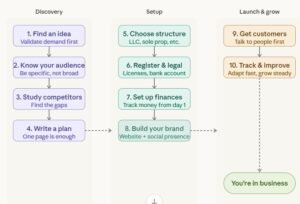
Here’s a visual overview of the full journey from idea to launch: Click any step in the diagram to dive deeper into that topic.
Common Mistakes to Avoid When Starting a Business
Even with a great plan, beginners tend to fall into the same traps. Watch out for these:
- Waiting for the “perfect” moment — There isn’t one. Start before you feel ready.
- Skipping market research — assuming people want what you’re building is the fastest way to waste months of effort.
- Pricing too low — Undercharging feels safe, but leads to burnout. Price based on value, not fear.
- Trying to do everything at once — Pick one offer, one audience, and one marketing channel first.
- Ignoring finances — Money problems kill more businesses than bad ideas do. Stay on top of your numbers.
Frequently Asked Questions
How much money do I need to start a business?
It depends on the type of business. Many service-based businesses (freelancing, consulting, coaching) can be started for under $500. Physical product businesses typically need more upfront. Start lean and grow from there.
Do I need a business plan to get started?
Not a formal one, but having some kind of written plan helps. Even a simple one-pager that outlines your offer, audience, and pricing will save you from making costly decisions without direction.
How long does it take to start making money?
This varies widely. Some people make their first sale in a week; others take 3–6 months. It depends on your business model, how actively you market, and how fast you learn from feedback. Set realistic expectations and keep going.
Do I need to quit my job first?
No, and most experts advise against it. Start your business on the side and transition full-time once you’ve replaced your income — or at least have consistent revenue coming in.
What’s the easiest type of business to start?
Service-based businesses (like freelance writing, virtual assistance, tutoring, or consulting) have the lowest barriers to entry. You’re selling your skills, so there are no inventory costs or complicated logistics.
Do I need a website to start?
Not immediately. Many businesses land their first few clients through social media or word of mouth. But eventually, a simple website builds credibility and makes it easier for customers to find and trust you.
Conclusion
Starting a business is one of the most challenging — and rewarding — things you can do. You don’t need a perfect idea, a massive budget, or years of experience. What you need is a clear plan, the willingness to start before you’re ready, and the patience to keep improving as you go.
Take it one step at a time. Focus on solving a real problem for real people. And remember — every successful business you admire started exactly where you are right now. The best time to start was yesterday. The second-best time is today.


